When Algorithms Meet Life
Exploring Bayesian thinking, global genomics, DNA synthesis, and the emerging world of biological computing.
Based on my event attendance, observations and photographs. Drafted with AI assistance; technical claims should be checked against the linked sources.
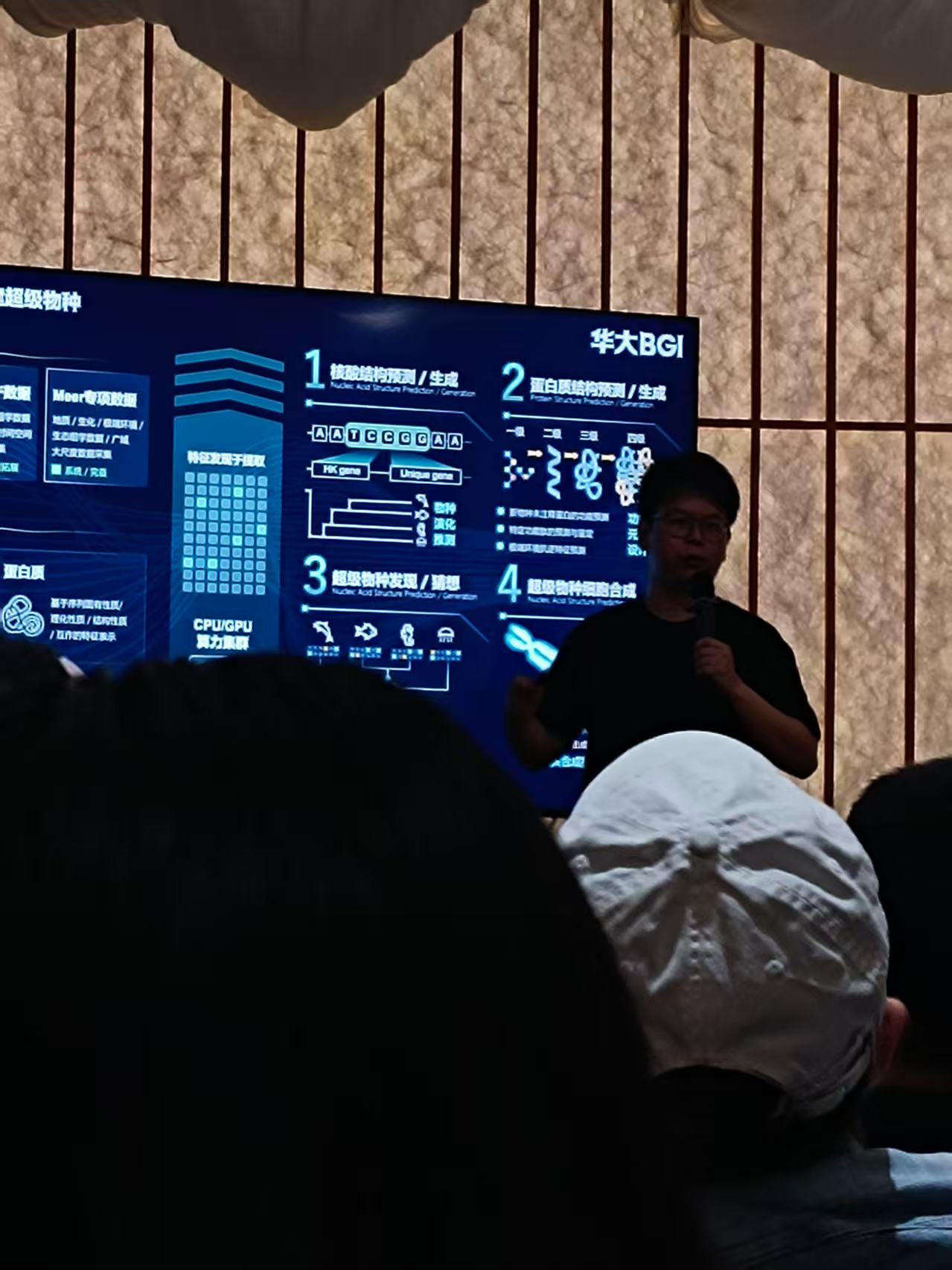
On October 24, 2026, I attended a science and humanities event in Shenzhen titled Scientific Future-Telling: From Bayes to You. The talk was presented by Dr. Jiang Xiaosen, a genomics PhD from the University of Chinese Academy of Sciences and dean of BGI’s School of Biointelligence, and co-organized by BGI Education and Dialogue Space.
The title posed a fascinating question: as algorithms become better at predicting aspects of our lives, how much of being human remains beyond calculation?
I came away with more than an introduction to a scientific field. The event offered a way to connect statistical reasoning, global research infrastructure, chemistry, computing, and the business models that make advanced technology accessible.
1. Bayesian Thinking: Updating What We Believe
Bayesian reasoning offers a practical way to think about uncertainty. We begin with an initial estimate and update it when new evidence becomes available. A prediction is not destiny; it is a probability conditioned on what we currently know.
In genomics, for example, a genetic variant may be associated with a higher likelihood of a particular condition without determining that an individual will develop it. Environment, lifestyle, other genetic factors, and limitations in the evidence all matter.
Good prediction is not about claiming certainty. It is about improving decisions as new evidence arrives.
I found this idea relevant beyond science. Whether assessing a supplier, entering a new market, or evaluating a technology, a useful judgment should be open to revision.
2. Genomics Is a Global Collaboration
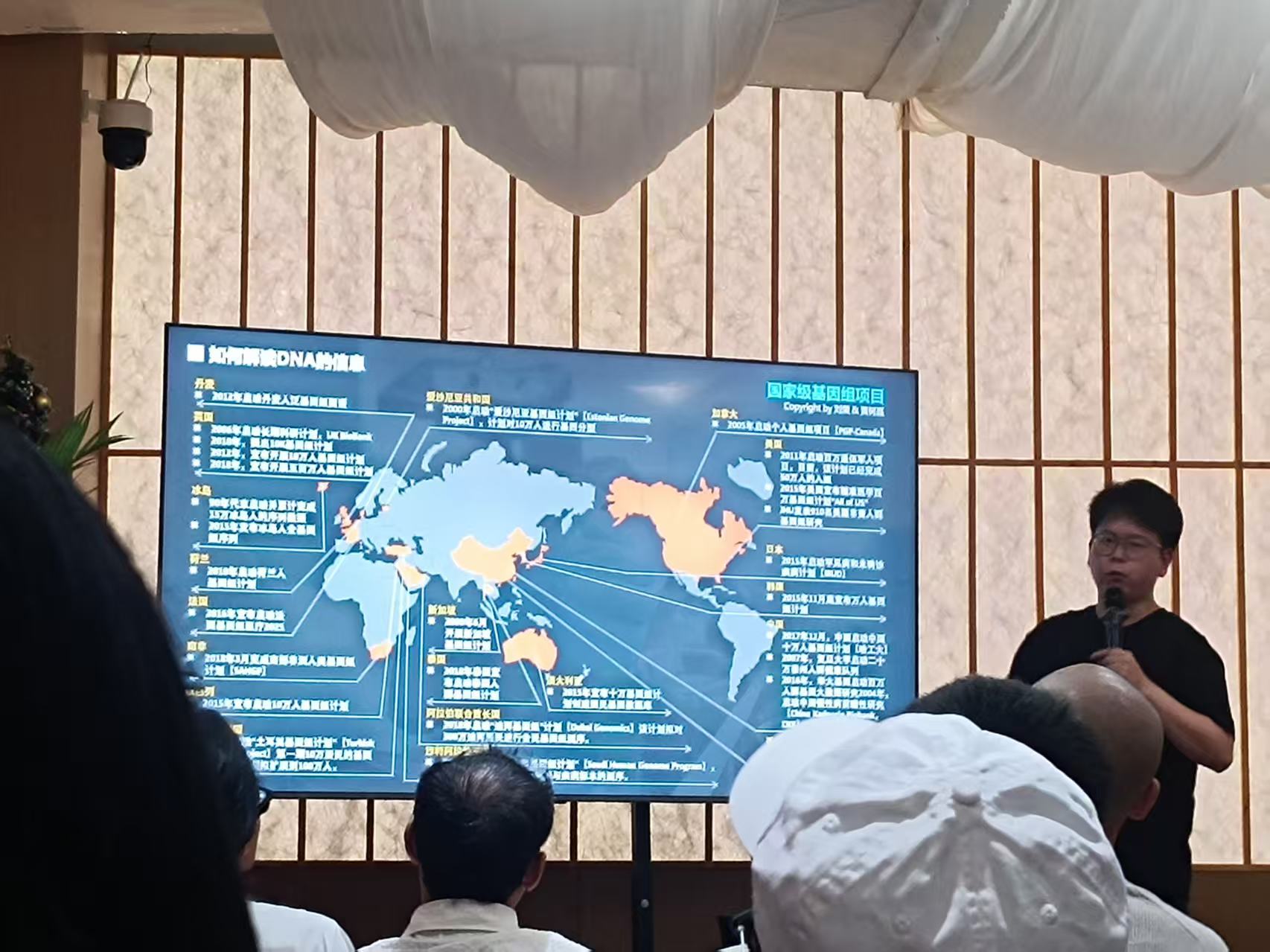
One slide that stayed with me mapped major genomics initiatives around the world. It illustrated how large-scale research depends on more than individual laboratories: sample collection, sequencing platforms, data infrastructure, scientific expertise, and cross-border collaboration all play important roles.
Such initiatives can support research into genetic variation, disease, and public health. They also raise difficult questions about informed consent, privacy, representative datasets, access to research benefits, and responsible international data sharing.
For me, this was a reminder that scientific progress is inseparable from the institutions and systems surrounding it.
3. Reading DNA and Building DNA
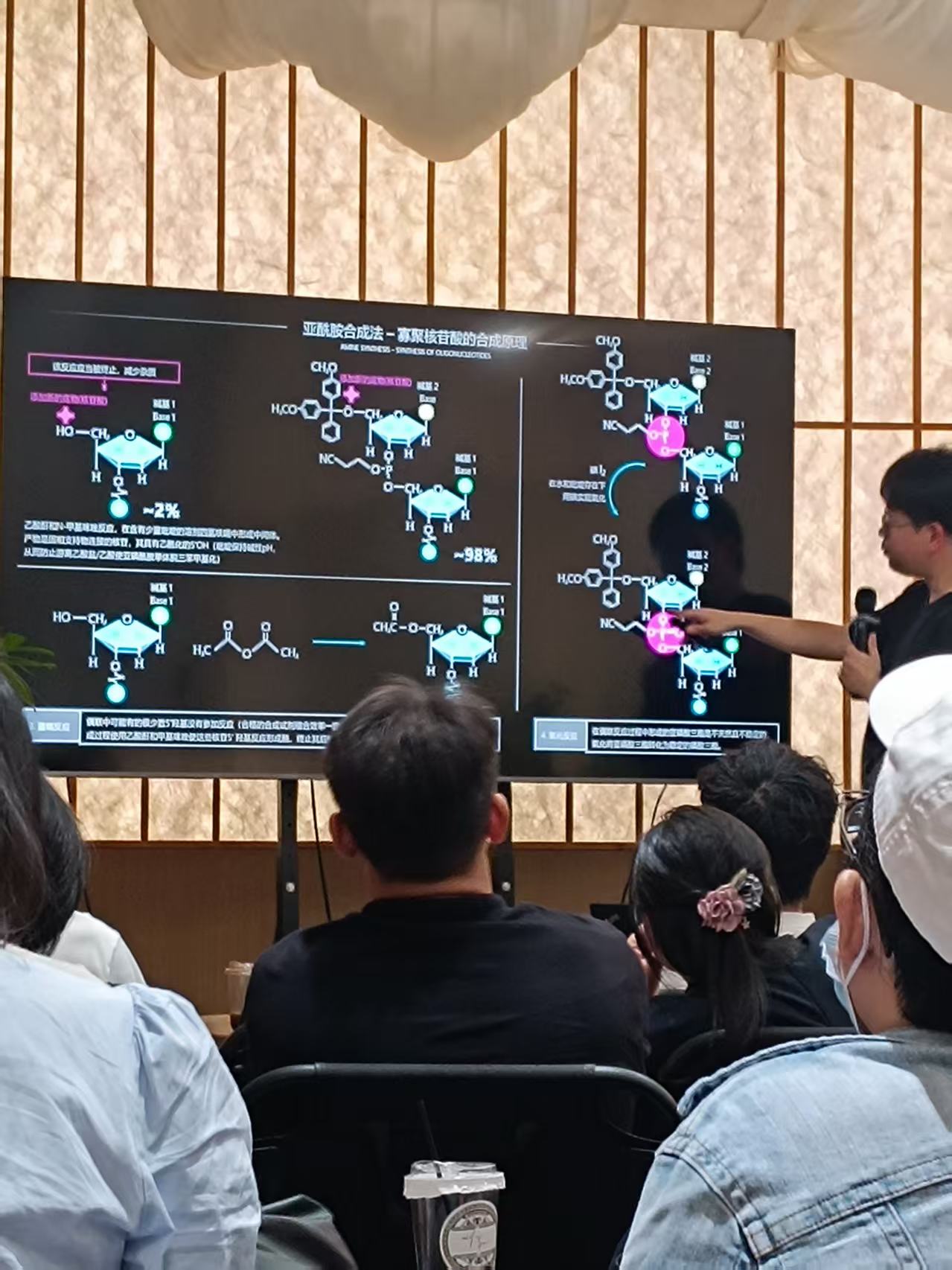
Another memorable part of the talk explored the chemistry behind nucleic acids. Two related technologies are worth distinguishing: DNA sequencing reads genetic information already present in a sample, while DNA synthesis produces designed sequences through chemical or biological methods.
Neither field advances through biology alone. They rely on chemistry, precision instruments, automation, software, and robust quality-control systems. Seeing these technical foundations made the phrase “interdisciplinary innovation” feel much more concrete.
4. Cortical Labs CL1: When Silicon Meets Neurons
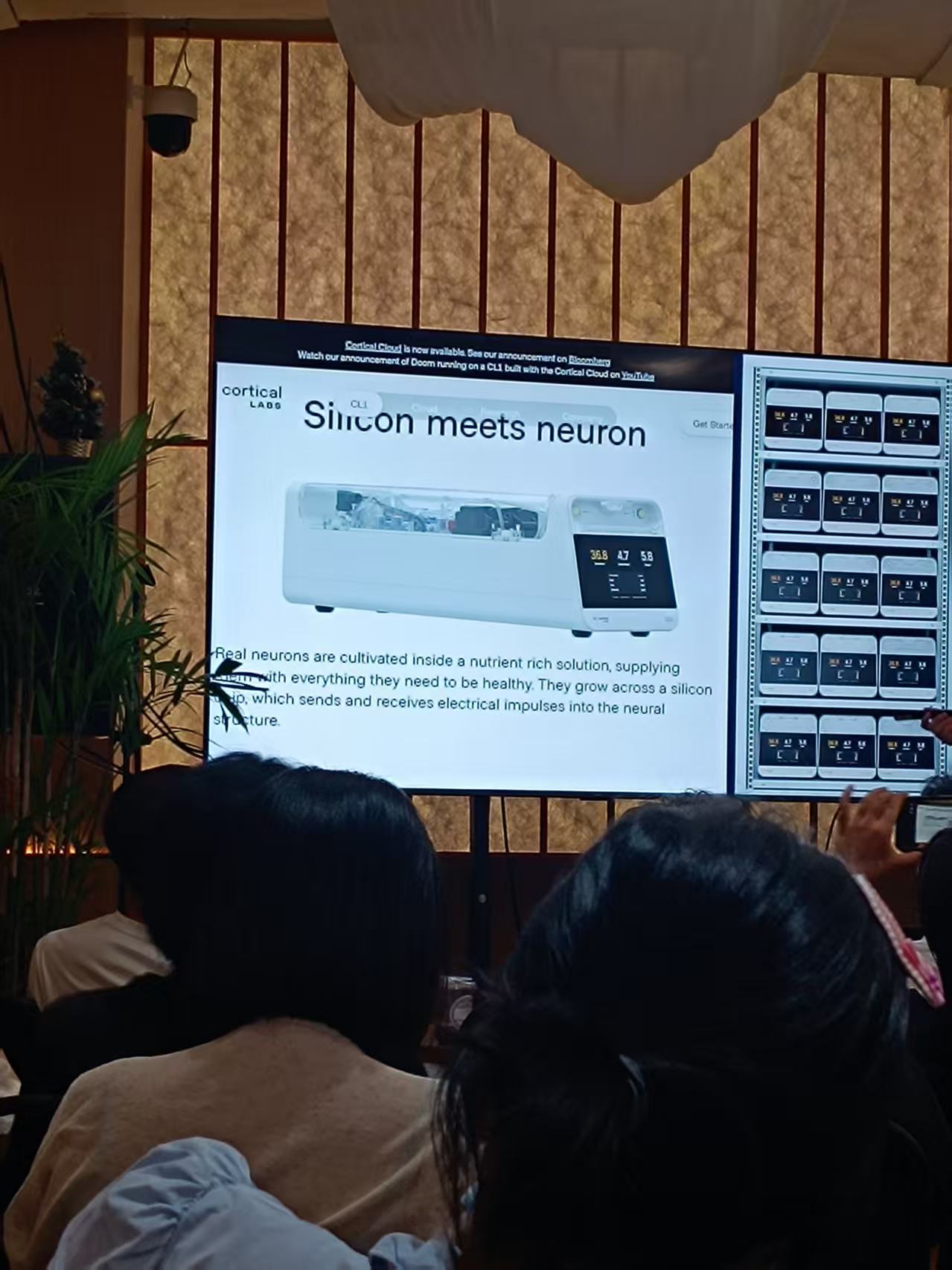
The presentation also featured the CL1 biological computer developed by Australian company Cortical Labs. Unlike a conventional computer, the CL1 integrates living neurons with silicon-based electronics. An interface can deliver electrical stimulation and measure neural responses, enabling experiments with biological neural networks in a closed loop.
This is an emerging research technology, not a replacement for an everyday laptop. Its potential uses include neuroscience experiments, studying learning behavior, and exploring biological responses in controlled research environments. Important questions remain around reproducibility, scalability, maintenance, and ethics.
5. From Hardware Ownership to Biological Computing as a Service
What interested me especially was the business model surrounding this kind of equipment. Advanced research systems can be costly and technically demanding to operate. Remote access may allow researchers to use specialized biological computing infrastructure without building and maintaining a complete facility themselves.
Cortical Labs has described a cloud-access model often discussed as Wetware-as-a-Service. This should not be confused with a conventional equipment rental: cloud access means using hosted biological computing resources remotely, whereas purchasing or physically leasing an instrument involves different operational responsibilities.
From a supply-chain perspective, the opportunity extends beyond one machine. It involves cell culture, microelectrode systems, laboratory automation, consumables, software, environmental control, maintenance, and service delivery. In emerging industries, the surrounding infrastructure can be as consequential as the headline invention.
6. What I Took Away
I am not a genomics researcher, and this article is not intended as a technical review. My interest lies in understanding how new scientific ideas develop into real-world systems—and how those systems interact with business, society, and human choices.
This event left me with three connected lessons: evidence should change our beliefs; scientific progress depends on collaboration across disciplines; and technological breakthroughs need thoughtful infrastructure and responsible deployment.
Perhaps the most valuable outcome of a talk about “scientific fortune-telling” is not a promise that the future can be calculated. It is the motivation to ask better questions about what we can know, what we cannot, and how we act in between.